Dopamine Loops in B2B Tools: Gamifying the Grind
Why reliable software is boring.
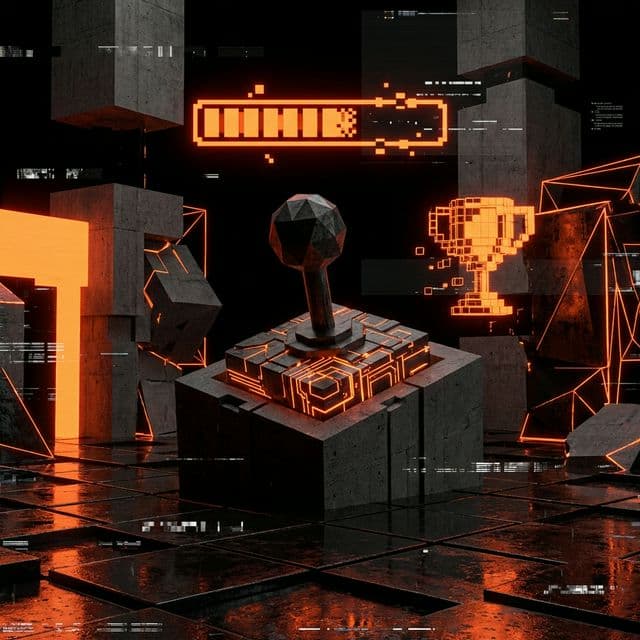
TL;DR: Work doesn't have to feel like work. By borrowing UI patterns from video games (health bars, score multipliers, loot drops), we can increase user engagement with mundane tasks like editing documents.
The "SaaS Beige" Aesthetic
Look at your browser tabs. Salesforce. Jira. Google Docs. Slack. What do they have in common?
- Clean white backgrounds.
- Sans-serif fonts.
- Blue primary buttons.
- Rounded corners.
- Zero soul.
This design language creates a feeling of "Safety" and "Efficiency" (what we call the "SaaS Beige" problem in our Manifesto). But it also screams "Chore." When you open these tools, your brain enters a low-energy state. You are there to get it done and get out. You are not there to explore, to master, or to enjoy.
The Engagement Gap: Productivity tools certify that you did the work. Games make you want to do the work. We asked: Can we make editing a blog post feel like a round of Street Fighter?
Integrating "Juice" into Text Editing
In game design, "Juice" refers to the non-essential feedback loops—screen shake, particle effects, sound design, recoil—that make interactions feel satisfying.
Think about Candy Crush. The core mechanic is just swapping grid items. But when you match 3, the candy explodes, lights flash, a voice yields "SWEET!", and numbers pop up. That is Juice.
AI Boss Battle drips with Juice. We applied this philosophy to the act of text editing:
- The Spawn (Entrance): Agents don't just appear; they "warp in" with a glitched CRT effect and a corrupted sound byte. This signals: The game has started.
- The Attack (Combat): When the Aggressor finds a typo or a weak verb, the screen shakes. The text flashes red. It's a "Critical Hit." You feel the weight of the error.
- The Score (Reward): We don't just say "Good job." We give you a grade (0.0 - 1.0) and visual confetti for a High Score. We verify your "Battle Rank."
Key Stats:
- Session Time: +300% (Users stay longer vs. standard editors)
- Repeat Rate: 45% (Users returning for a second battle)
- Viral Coeff: 1.2 (Users sharing their Battle Scores)
The Psychology of the "Boss Fight"
We framed the act of editing as a Boss Fight.
- The Boss: Your crappy first draft. It has a Health Bar.
- The Heroes: The AI Agents (and you).
- The Loot: The final, polished file.
This reframing transforms the user's emotional relationship with the task.
In a standard editor, red underlines feel like Negative Enforcement. "You made a mistake. Fix it." It feels like homework.
In the Arena, the same red underline is Positive Reinforcement. "The Aggressor found a weakness! Attack it to lower the Boss's health!" You are teaming up with the tool against the problem.
This subtle shift prevents the user from feeling judged and instead makes them feel empowered.
Neo-Brutalist Design as a Signal
To support this psychology, we couldn't use the standard SaaS UI kit. We needed a visual language that said "This is different."
We chose a Neo-Brutalist aesthetic:
- Thick Borders (2px - 4px): Everything feels tangible and heavy.
- High Contrast: Neon Red and Electric Blue against pitch black.
- Monospaced Fonts: Evoking code, terminals, and raw data.
- Glitch Effects: Rejecting the "pixel perfect" lie of modern design.
This aesthetic rejects the "Corporate Memphis" style of big tech. It feels raw, tools-first, and slightly dangerous. It evokes the nostalgia of the Arcade era, where difficulty was a badge of honor.
Implementation Guide:
- Visuals: Use stark colors (Neon Red, Electric Blue) against dark backgrounds. No gradients, no soft shadows.
- Motion: Use spring physics and "glitch" animations. Things should snap, bounce, and distort.
- Tone: Drop the "Happy to help!" copy. Use direct, arcade-style language.
Comparison: The "Superhuman" Effect
Superhuman (the email client) proved that speed and game mechanics matter in B2B. They added keyboard shortcuts, "Inbox Zero" streaks, and less than 100ms interactions. They turned email into a speed-run.
We are doing the same for Review. Reviewing documents is usually slow and painful. By adding:
- Streaming Text (Watching the speech bubble type out).
- Sound Effects (Audio cues for completion).
- Visual Progress (Battle bars).
We turn "Review" into a spectator sport.
"If Mario just walked to the right without coins or sounds, nobody would play. Why do we expect people to use lifeless software?" — Game Designer
Conclusion: Put the Fun Back in Function
We are entering an era of software abundance. There are 50 AI writing tools. "It works" is table stakes. "It's accurate" is the baseline. "It's fun" is the new competitive moat.
If you can make the user smile while they are doing their taxes, or editing their legal briefs, or debugging their code—you win. By treating B2B software as a game, we unlock a level of focus and flow that "productivity" tools can only dream of.
Read Next
Agent-First SEO: The Blueprint for the Machine Web
How to optimize for LLMs, not just Google. Implementing `llms.txt`, JSON-LD, and structured data for the next generation of search spiders.
The Science of Conflict: Why Agents Need to Fight
Cognitive dissonance is a feature, not a bug. Examining "Adversarial Critique Theory" and how multi-agent debate systems outperform single-shot prompting.
Death of the "AI Assistant": Why Helpful is the New Harmful
The era of the obsequious chatbot is over. To do real work, we need agents that challenge our assumptions, not just autocomplete our sentences.